
AMCC

AMCC

Online Quran Classes with Tajweed & Hifz for Kids

If you’re looking for Quran for kids training that supports real progress—reading correctly, developing Quran Recitation & Tajweed skills, and building confidence to memorize—an online program can be a practical option for busy families.

At American Muslim Community Center (AMCC), our Quran Classes are designed to guide children from beginner to intermediate levels in a warm, structured, and faith-centered learning environment. Parents aren’t just enrolling a child—they’re joining a community that values manners, consistency, and love for the Quran.

What Parents Usually Want in Quran Learning for Kids

Most parents want more than “reading words.” They want their child to:

  • Learn proper recitation with Tajweed (pronunciation, rhythm, and key rules)
  • Build a foundation in Quran reading even if Arabic is limited
  • Start and progress in Hifz (memorization) in a supportive way
  • Develop Islamic manners: adab in class, respect, and character growth
  • Feel encouragement, not pressure—so they actually enjoy learning

A strong program also helps children connect the Quran to daily life, so recitation becomes meaningful—not just memorized.

The AMCC Approach: Quran Recitation, Tajweed, and Hifz—Together

AMCC’s Quran learning pathway focuses on three areas that work best when taught together:

A neatly arranged tutoring workspace with a tablet and study notes representing careful Quran recitation and structured memorization, styled with deep green and gold tones.

1) Quran Recitation & Tajweed (Correct Reading)

Children learn how to read clearly and accurately with guidance on common pronunciation challenges, including:

  • Makharij (correct articulation)
  • Elongation (madd) and proper length
  • Stopping and starting (waqf) according to recitation style
  • Avoiding frequent mistakes at the beginning of the journey

2) Online Hifz Classes (Memorization With Structure)

Memorization is taught with clear steps:

  • Short, manageable memorization targets
  • Review practices that strengthen retention
  • Supportive checking so children know what to improve
  • Consistency habits that make progress sustainable

3) Simple Understanding & Living the Message

To build love for the Quran, we pair recitation with age-appropriate reminders about meaning and connection—so children learn not only how to read, but also why.

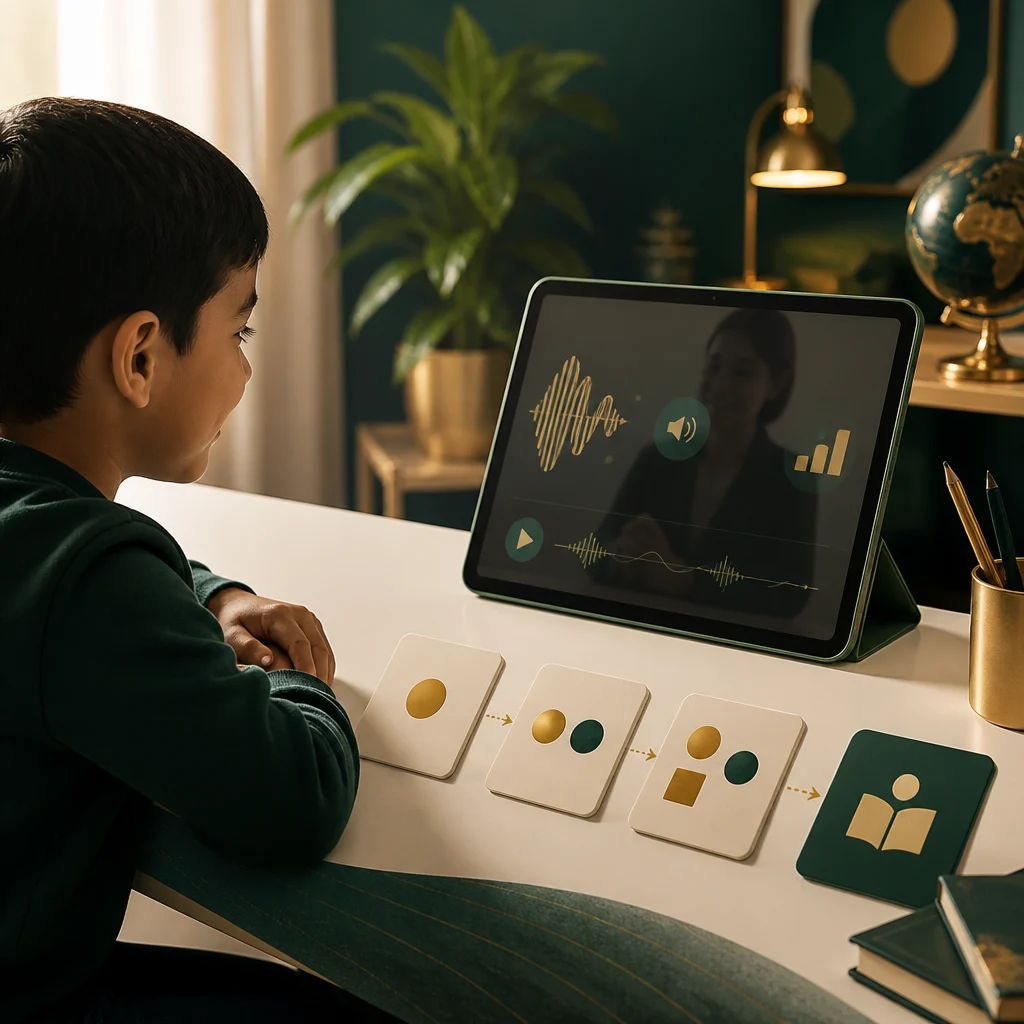
A kid-friendly online learning desk with a tablet and progression cards using abstract shapes, presented in deep green and warm gold styling.

“Start Here”: Beginner Path for Kids (Even With Little/No Arabic)

Many parents worry: “What if my child doesn’t know Arabic?” The good news is that children can still begin Quran learning step-by-step.

Here’s a beginner-friendly starting roadmap:

  • Step 1: Sound-first learning Children practice recognizing letters and Quran sounds in a gradual way.
  • Step 2: Fluency through guided recitation Students learn short sections with correction and repeat practice.
  • Step 3: Tajweed basics Early Tajweed rules are introduced in simple, practical patterns (what to do and what to avoid).
  • Step 4: Build toward memorization Once reading accuracy improves, memorization becomes easier to maintain.

AMCC’s goal is to help students gain confidence early—so learning feels possible from day one.

What Your Child’s Weekly Progress Can Look Like

A well-structured program makes growth visible. Children benefit from short goals and clear feedback, such as:

  • Weekly recitation practice focused on specific sounds/rules
  • Memorization milestones (small surahs/segments first)
  • Review sessions that build strong retention
  • Exercises that reinforce Tajweed habits during reading

Parents also appreciate knowing what’s improving: clarity, consistency, and confidence.

Tajweed Tips Parents Can Support at Home (Quick + Practical)

You don’t need to be an expert to help your child. Here are helpful ways to support progress at home:

  • Practice in short sessions Even 10–15 minutes can work when done consistently.
  • Focus on one improvement at a time If the teacher highlights a Tajweed rule, repeat it until it feels natural.
  • Keep review gentle and frequent Review is not “extra work”—it’s what makes memorization stick.
  • Reward effort and adab Celebrate consistency, respect in class, and trying again after mistakes.

When home support matches what the child learns in class, progress speeds up naturally.

A home practice setup with a tablet and structured study materials for Tajweed support, featuring deep green and gold accent tones and no visible text.

Quran for Kids: Building Love, Manners, and Motivation

Confidence comes from encouragement. AMCC places strong emphasis on the character side of Quran learning:

  • Respectful listening during lessons
  • Proper adab and mindful learning
  • Encouragement to try again and learn from corrections
  • A supportive community environment where children feel belonging

When children feel safe, they participate more—and motivation grows.

Family Benefits: When Parents Learn Too

Many parents discover that learning alongside their child makes a big difference.

Benefits for families often include:

  • Stronger consistency with shared practice
  • Better understanding of classroom goals
  • A calmer, more supportive learning routine at home
  • Deeper emotional connection to Quran recitation and Hifz

AMCC welcomes families looking for a learning community—not just a curriculum.

Why Online Quran Classes Work for Busy Parents

Online learning can be highly effective when it includes:

  • Qualified teacher guidance for accurate recitation
  • Structured lesson plans and follow-up
  • Clear feedback so children improve steadily
  • A welcoming environment that supports confidence and consistency

Parents can coordinate schedules more easily while still providing meaningful Quran education.

Community Connection: Learning Doesn’t Happen in Isolation

AMCC is more than a classroom. We aim to serve Central Florida by building an inclusive Muslim community that supports youth and families through Islamic education and related programs.

For families, that means:

  • Students learn with a supportive mindset
  • Parents feel connected to a broader Islamic community
  • Children grow with values alongside recitation and memorization

Frequently Asked Questions (FAQs)

1) What is Quran Recitation & Tajweed for kids?

Quran Recitation & Tajweed means reading the Quran with correct pronunciation and proper recitation rules. For children, Tajweed is taught step-by-step so they learn how to sound each letter properly and recite with correct length and pauses.

2) Can my child start learning Quran even if we don’t know Arabic?

Yes. Many students begin with guided instruction that focuses on Quran reading sounds and gradual progression. Teachers help children build a foundation step-by-step.

3) How do Online Hifz Classes work for children?

Online Hifz classes typically use a structured approach: small memorization targets, guided checking, and consistent review. This helps children memorize without feeling overwhelmed.

4) Will my child be corrected if they make mistakes?

Yes. Correction is part of learning. A good program provides feedback so children improve accuracy and develop correct habits over time.

5) What if my child is shy or has trouble focusing?

A supportive environment matters. Teachers use structured lessons, encouragement, and age-appropriate learning methods to help children stay engaged and build confidence.

6) How can we help at home without becoming overwhelmed?

Keep practice short and consistent. Focus on the one improvement your teacher highlights, and review regularly. The goal is support, not pressure.

Next Steps: Explore AMCC Quran Classes

If you want your child to learn Quran for kids with guided instruction in Quran Recitation & Tajweed and supportive Online Hifz Classes, AMCC is here to help.

Explore AMCC’s Quran Classes and learn how the program supports beginner-to-intermediate learning journeys in a welcoming community environment.