

Intercultural Nikah Steps & AMCC Support
Planning a Nikah as an intercultural Muslim couple means balancing Islamic teachings with real family traditions—without confusion, stress, or miscommunication. At the American Muslim Community Center (AMCC), we help you move through the process with clear guidance, qualified support, and a welcoming community that honors both faith and culture.
Schedule an AMCC Nikah services consultationYour Nikah, guided by compassion and Islamic integrity
This guide is for intercultural Muslim couples who want a Nikah process that respects Islamic teachings while also honoring family expectations—so your marriage begins with strong Islamic and family values.
What is Nikah (Islamic marriage)—and what makes it valid?
In Islam, Nikah is a formal marriage contract. It’s not just a ceremony—it’s a commitment built on:
- Mutual responsibility
- Mercy (rahmah) and kindness
- Honesty, clarity, and Islamic boundaries
- A clear agreement covering mahr (dowry/gift) and the essential marital terms
A valid Nikah generally includes the proposal and acceptance (ijab & qabul), the presence of appropriate wali (guardian) (as applicable), and witnesses, along with the contract being properly carried out.
Because different schools of thought and cultural customs may shape details, AMCC focuses on Islamic integrity first, while helping families understand what matters most and what can remain flexible.
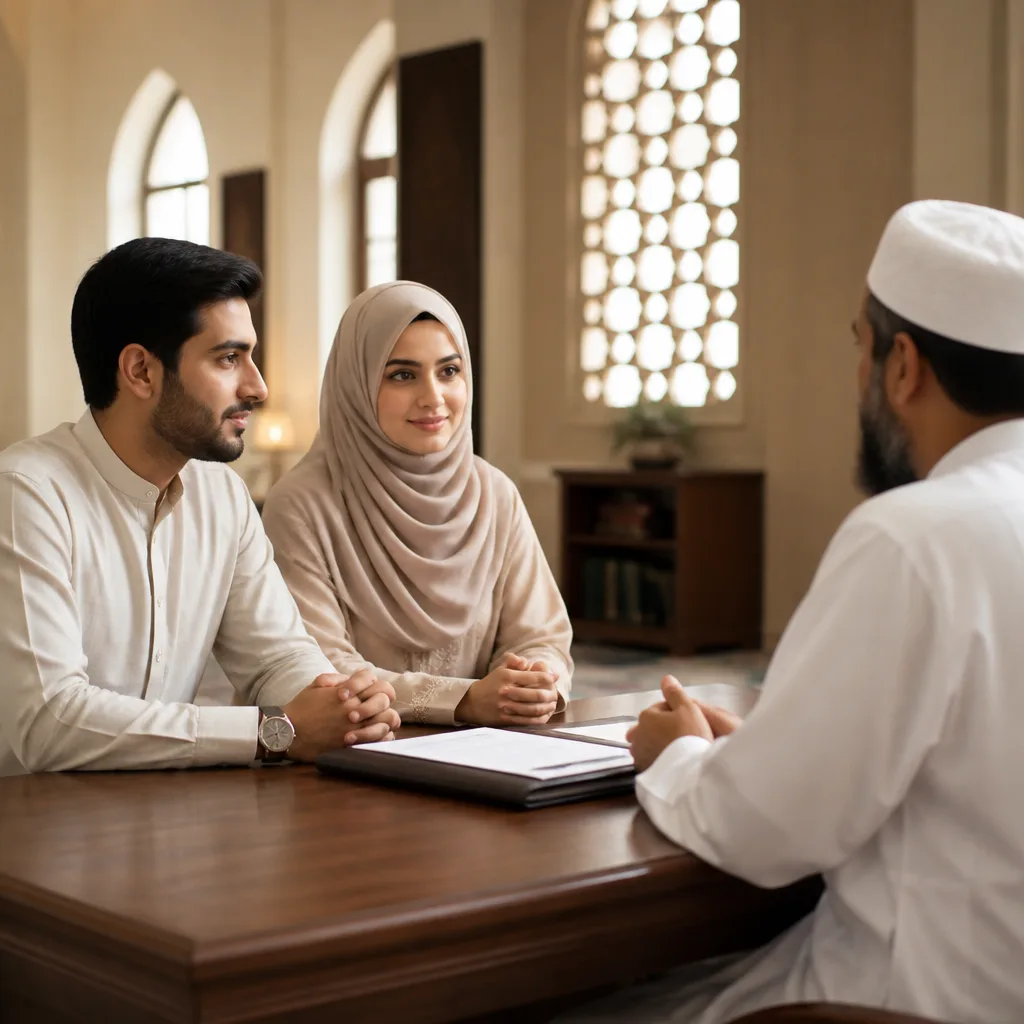
The step-by-step Nikah process (with a timeline you can actually follow)
Below is a practical, faith-based roadmap inspired by the structure found in step-by-step Nikah guides—adapted for intercultural couples and supported by AMCC.
-
Step 1: Marriage readiness & intentions (start here)
Before the ceremony date, AMCC helps you prepare spiritually and practically.
At AMCC, this is supported through our School of Nikah, a focused space for learning and readiness, including:
- Islamic expectations for marriage
- Emotional readiness and communication
- Responsibilities and shared values
- Making decisions with clarity (not pressure)
Outcome: You feel confident about Islamically aligned next steps—without rushing.
-
Step 2: Choose key people for the Nikah (wali, witnesses, officiant)
Intercultural couples sometimes assume the “people involved” will be identical in every situation. In reality, the best approach is to plan intentionally.
AMCC helps you coordinate:
- Your officiant/imam
- Witnesses (as required and suitable)
- Wali/guardian involvement (as applicable to your situation)
Outcome: You know who needs to be present and why—no last-minute panic.
-
Step 3: Discuss mahr and marital expectations with honesty
A clear discussion builds trust. AMCC encourages couples to talk about:
- Mahr (clarifying what is agreed upon)
- Shared expectations (daily life, roles, intentions)
- Compatibility areas that matter most in real life—not just on paper
- Boundaries, kindness, and realistic family dynamics
Outcome: Your contract reflects clarity and your marriage starts with transparency.
-
Step 4: Prepare documentation (and get organized early)
Documentation can be the silent stressor for couples planning in the U.S.
AMCC will guide you on the requirements you need for the Nikah process and help you plan for what’s typically required for marriage administration. Requirements can vary by case, so we support you with a clear checklist.
Important note: AMCC supports Islamic guidance and ceremony coordination. For civil/legal requirements, we can help you understand what you may need, but you should confirm details with appropriate local legal resources if needed.
Outcome: You avoid missing documents and reduce delays.
-
Step 5: Plan the ceremony with Islamic essentials (and cultural dignity)
This is where intercultural couples often wonder what’s “mandatory” vs. what’s flexible.
AMCC helps you plan around the essential Islamic components, while honoring your family traditions—whether you’re planning something classic, intimate, or celebration-forward.
Outcome: Your cultural celebration complements the Nikah, instead of complicating it.
-
Step 6: Conduct the Nikah (ijab & qabul + contract + blessings)
On the day of the Nikah, the focus is clarity and worshipful sincerity.
Typically, the Nikah process includes:
- Ijab & qabul (proposal and acceptance)
- The Nikah contract being properly carried out
- Witnesses present
- A respectful, Islamic tone—followed by dua and blessings
AMCC’s team helps coordinate so everything flows smoothly and families understand what’s happening. Outcome: You experience a ceremony with peace—not confusion.
-
Step 7: After Nikah—spiritual counsel and practical next steps
A strong marriage doesn’t start when the lights go on—it starts when you commit to growth.
AMCC provides ongoing spiritual counsel before and after marriage, supporting couples with:
- Building a mercy-based relationship
- Healthy communication
- Handling family involvement with Islamic boundaries and kindness
- Advice for long-term harmony
Outcome: Your union begins on strong Islamic and family values.
What to expect at AMCC for Nikah services
When you choose AMCC, you’re not just booking a ceremony—you’re joining a community that helps you prepare and sustain your marriage.
Your AMCC Nikah service support may include:
- Nikah readiness meetings (spiritual + practical)
- Help coordinating the timeline and ceremony plan
- Guidance on documentation requirements
- Connection to a qualified imam/officiant
- Support for family communication
- Post-Nikah counseling and encouragement
We believe that Empowering Communities also means strengthening marriages with guidance, clarity, and compassion.

Supporting families (clear communication + cultural sensitivity)
For intercultural couples, family communication can be the difference between a smooth process and unnecessary stress.
AMCC helps you navigate family needs through:
- Clear explanations of the Nikah structure
- Respectful guidance on what Islam requires—and what can be flexible
- Family-centered communication strategies (who participates, what is expected, and when)
- A calm, organized process that helps parents and elders feel honored
You can have both: authentic Islamic integrity and family traditions that feel meaningful.
Building a healthy marriage using Islamic teachings
A Nikah is a sacred contract, and Islamic guidance helps you thrive inside it. AMCC encourages couples to focus on:
- Mercy and respect in daily life
- Shared values and realistic planning
- Patience during adjustment periods
- Taking responsibilities seriously—without harshness
- Seeking knowledge, counsel, and support when challenges arise
For new and second-time couples: you’re welcome here
- First-time couples who feel nervous or overwhelmed
- Second-time couples who want dignity, clarity, and spiritual direction
- Couples who want a community that doesn’t judge—only guides
Your story matters, and your next chapter should begin with care.
Honoring traditions (including an indian beach wedding)
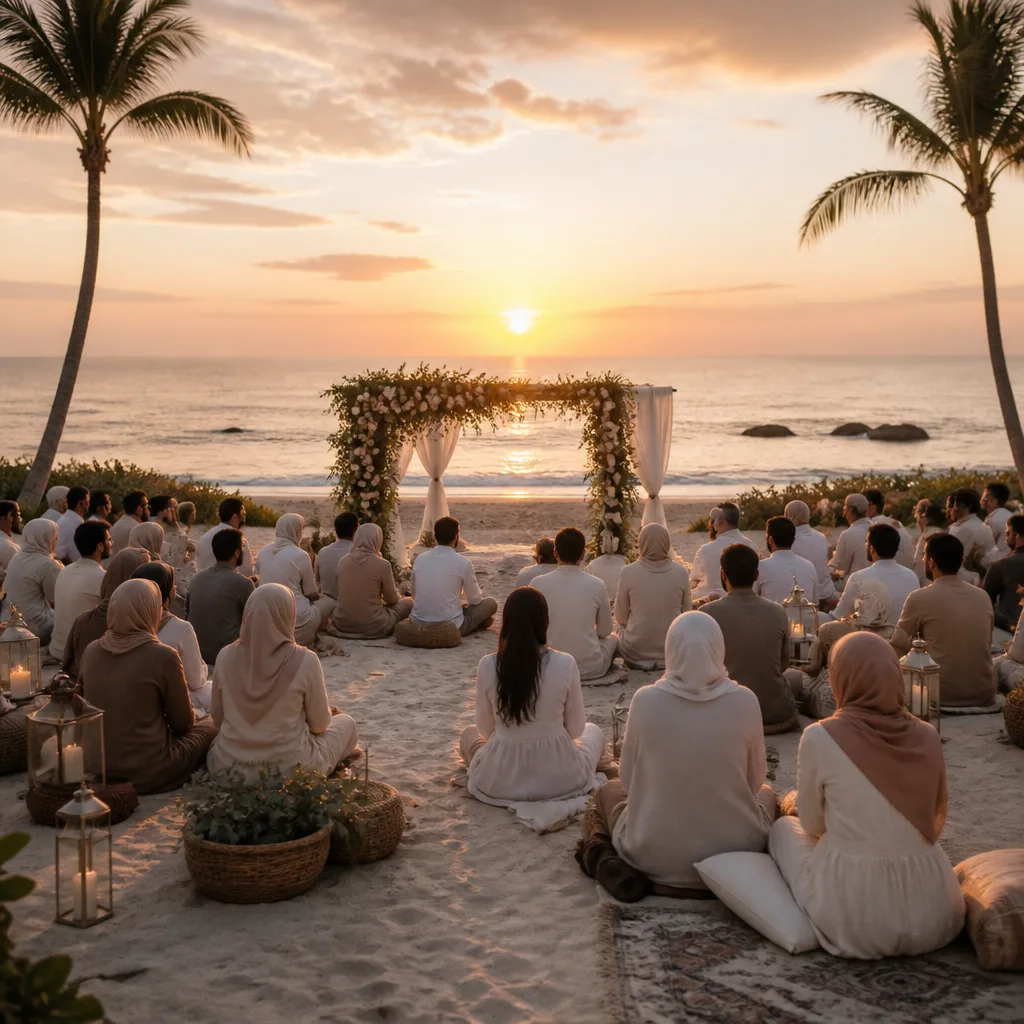
Many couples want a ceremony that feels like “their story.” Some imagine a beautiful setting such as an indian beach wedding—a celebration that reflects culture, family warmth, and joy.
AMCC can help you think through how to keep the Nikah Islamically structured while still creating a meaningful cultural experience, including:
- Proper planning for space, modesty, and comfort
- A respectful flow that protects the sanctity of the contract
- Clear coordination so families feel included—not confused
Your cultural celebration complements the Nikah, instead of complicating it.
Nikah Services FAQ (for intercultural couples)
1) Do we need the same cultural format to have an Islamic Nikah?
No. Islamic validity comes from the Nikah contract elements and proper structure—not from one specific cultural ceremony style. AMCC helps you keep the Islamic essentials clear while honoring your traditions.
2) What if our families disagree about ceremony details?
AMCC supports communication and clarity. We’ll help explain Islamic requirements and offer respectful ways to include cultural elements without disrupting the Nikah process.
3) How far in advance should we start?
Many couples begin 6–12 weeks before the ceremony date (or earlier if family schedules are complex). If your timeline is shorter, contact AMCC—we’ll help you map out what’s possible.
4) Is Nikah the same as a legal marriage?
Nikah is an Islamic marriage contract. Civil/legal requirements can be separate depending on jurisdiction and personal circumstances. AMCC can guide you on process coordination and documentation planning; for legal specifics, confirm with appropriate civil authorities.
5) What is the School of Nikah?
It’s AMCC’s structured learning and readiness support to help couples understand Islamic expectations, prepare emotionally and practically, and enter marriage with clarity and confidence.
If you want your Nikah to be guided with compassion, organized with clarity, and supported by an inclusive Central Florida community, AMCC is here.
Ready to plan a Nikah that feels peaceful—and truly Islamic?
Take the next step:
- Schedule an AMCC Nikah services consultation
- Discuss your timeline, intercultural needs, and family expectations
- Start your readiness journey through the School of Nikah
- Receive a clear checklist and coordinated support for ceremony day and beyond
AMCC makes Nikah simple, faith-based, and community-supported—helping couples come together with proper Islamic guidance, care, and ceremony support.